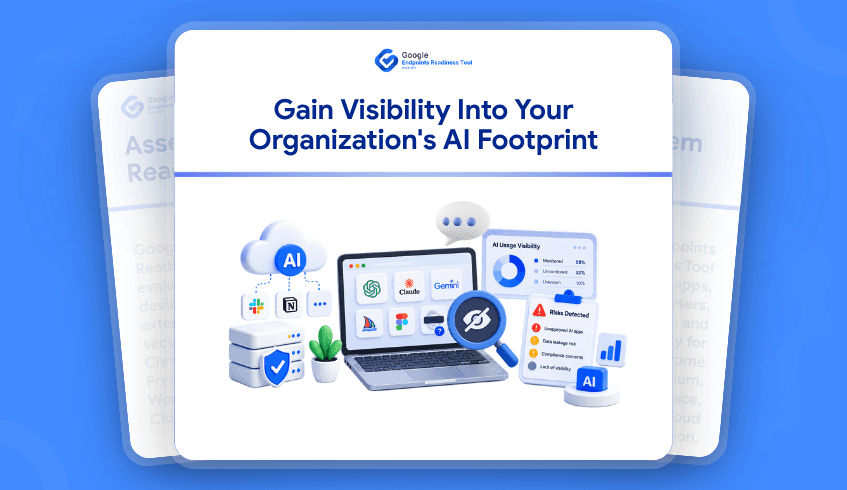
Shadow AI Is Becoming a Visibility Challenge for Enterprises
Shadow AI Is Becoming a Visibility Challenge for Enterprises
AI adoption is expanding rapidly across organizations, but IT teams may not always have a complete view of where AI is being used. Employees can access public AI tools, browser-based applications, local AI models, and automation platforms outside traditional software procurement processes.
Larridin’s September 2026 analysis highlights this growing visibility challenge, citing Writer’s 2026 enterprise AI adoption research, which found that 35% of employees had entered proprietary information into public AI tools. The same research found that 67% of executives believed their organization had experienced a data leak or security breach because of an employee using an unapproved AI tool.
The Challenge of Building an AI Inventory
Traditional software inventories are built around applications that IT teams install, manage or approve. AI usage can be much broader because employees can access tools directly through browsers or adopt new AI services without going through established procurement processes. This makes it difficult to understand which AI applications are being used, how they are being accessed, and whether they are sanctioned by the organization. Larridin also reports that enterprise monitoring can uncover three to five times more AI usage than organizations initially expect.
An accurate inventory is an important starting point for AI governance. Before an organization can review how an AI application is being used, assess its relevance to internal policies, or determine whether additional controls are required, it needs visibility into what is actually present across the environment. This becomes increasingly important as AI usage expands beyond traditional installed applications. A broader view needs to include both managed and browser-accessed AI activity.
AI Usage Extends Beyond Installed Applications
AI applications are no longer limited to software installed directly on employee devices. Employees can interact with AI through websites, browser-based applications, automation platforms and locally running language models. These different access methods can create separate areas of AI activity that are difficult to understand through conventional application inventories alone. Identifying these sources provides a more complete view of how AI is being used across an organization.
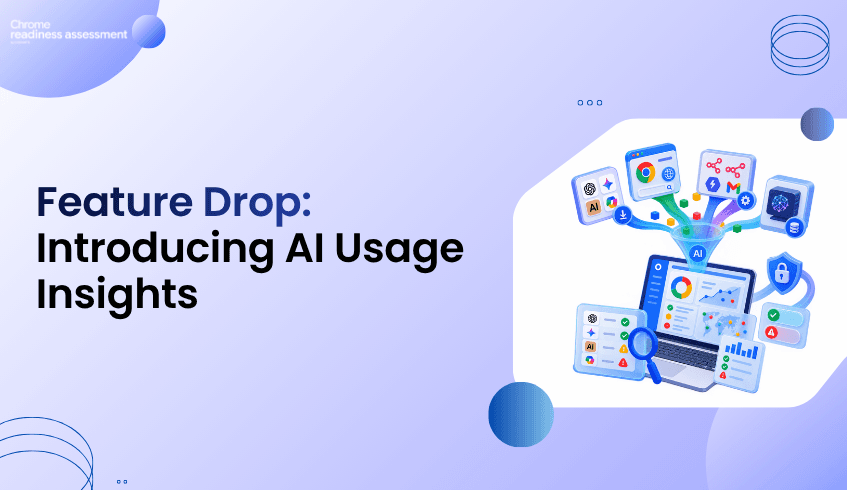
Google Endpoints Readiness Tool’s AI Insights section provides visibility into AI usage across the organization to support AI governance and decision-making. It brings together information about installed AI applications, web-accessed AI, local AI models, and workflow automation platforms. Organizations can also view direct and indirect AI usage and understand the governance status associated with identified AI applications. This gives IT teams a centralized view of AI activity instead of relying only on known or manually reported applications.
From Organization-Level Visibility to Device-Level Details
Understanding the overall AI footprint is only the first step. IT teams may also need to determine where specific AI activity is occurring and what applications or platforms are involved on individual devices. Google Endpoints Readiness Tool allows administrators to drill down from organization-level AI insights into device-level details, providing additional context around the AI activity detected on each device. This helps connect broad AI usage patterns with the specific devices and applications behind them.
Device-level insights can include installed AI applications, web-based AI applications, local AI models, and agentic automation platforms. Administrators can also review information such as AI categories, usage types, governance status, and application usage details. This level of visibility can help teams identify where AI is being used and understand the different ways employees interact with AI tools. It also provides a more practical starting point for reviewing individual areas that require attention.
Supporting AI Governance with Sanctioning
Visibility becomes more useful when organizations can apply their own governance context to the AI activity they discover. Google Endpoints Readiness Tool’s Report Generator includes AI Sanctioning, where administrators can review discovered AI applications, workflow platforms, local LLMs, and browser-integrated AI. These items can be classified as Sanctioned or Unsanctioned, helping organizations distinguish tools that have been approved from those that may require further review. Administrators can also configure whether identified AI activity is considered direct or indirect where applicable.
This classification does not determine whether an AI application should ultimately be allowed or restricted. Instead, it gives organizations a structured way to understand their AI footprint and identify applications that may need additional assessment. Combined with device-level visibility, sanctioning helps connect AI discovery with the organization’s own governance approach. The result is a more contextual view of AI activity across the environment.
Turning AI Visibility Into Readiness Insights
AI adoption will continue to introduce new applications, workflows, and ways of working. As this happens, relying only on manually maintained software inventories can make it harder to understand the actual AI landscape within an organization. Continuous visibility can help IT teams identify AI activity across different access methods and understand where additional governance review may be needed.
AI Insights in Google Endpoints Readiness Tool brings this visibility into a broader readiness assessment, helping organizations understand AI activity across their environment. From installed applications and browser-accessed AI to local models, workflow platforms, and governance classifications, Google Endpoints Readiness Tool provides the insights needed to build a clearer picture of AI usage. Explore AI Usage Insights with Google Endpoints Readiness Tool. Visit Google Endpoints Readiness Tool
Frequently Asked Questions
What is Shadow AI?
Shadow AI refers to AI tools or services used within an organization without going through established IT approval or governance processes.
Why is AI visibility important?
Visibility helps organizations understand which AI tools are being used, how they are accessed, and where additional governance or review may be required.
What does Google Endpoints Readiness Tool AI Insights identify?
Google Endpoints Readiness Tool AI Insights provides visibility into installed AI applications, web-accessed AI, local AI models, workflow platforms, and AI usage and governance information.
Can Google Endpoints Readiness Tool show AI usage at the device level?
Yes. Google Endpoints Readiness Tool allows administrators to drill down into individual devices to review detected AI applications, web-based AI, local models, and automation platforms.
Can administrators classify AI applications?
Yes. Google Endpoints Readiness Tool’s Report Generator provides AI Sanctioning options that allow administrators to classify identified AI applications and related AI technologies as Sanctioned or Unsanctioned.